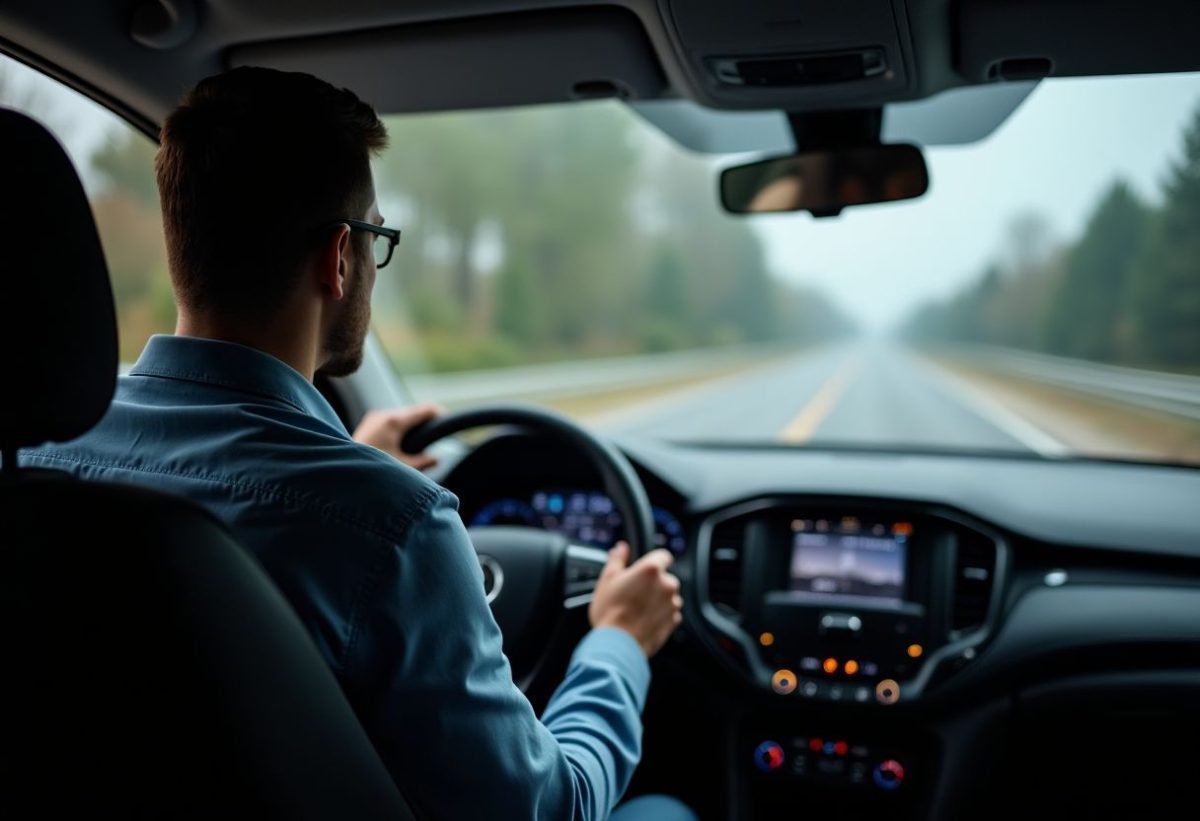
The process of obtaining a driver’s license is an important step in the lives of many individuals. Among the various challenges that mark this journey, the psychotechnical test for the license can prove to be a real challenge. Often overlooked, it is essential to understand its role and functioning to better prepare for it. This test, far from being a mere formality, evaluates essential skills that ensure safe and responsible driving.
For many candidates, it is a gateway to new independence, but also an assessment of cognitive and psychomotor skills fundamental for safe driving.
The origins of the psychotechnical test
The introduction of psychotechnical tests in the context of the driver’s license has its roots in a desire to improve road safety. But how did this need arise and become institutionalized over the years?
Initially, the design of the test was innovative in the landscape of evaluating driving skills. This system emerged in response to an increased awareness of the risks associated with driving.
First adopted in certain European countries, it gradually established itself as an international standard. The 1960s marked a decisive turning point, with a generalization of these tests targeting specific populations such as drivers who had lost their license due to serious offenses.
Today, psychotechnical tests are seen as essential tools for assessing the mental and motor qualities necessary for driving. This evolution reflects a constant concern to adapt evaluation methods to the contemporary challenges of road safety.
The functioning of the test
A psychotechnical test does not merely assess theoretical knowledge. It delves into the cognitive and motor capabilities of the candidate, allowing them to reveal their ability to react to unexpected situations.
- Cognitive assessment: The first step of the test involves measuring attention and concentration. These skills are essential for identifying potential dangers on the road and making quick decisions.
- Psychomotor coordination: Another part of the test focuses on the coordination between the mind and body. The way participants react under pressure is crucial to avoid unexpected accidents.
- Behavioral analysis: The test also evaluates emotional and behavioral reactions, which can significantly influence driving.
These different dimensions of the test are often administered using simulators or computer exercises that recreate situations similar to those encountered on the road. The goal is to provide a comprehensive and nuanced assessment of the driver’s skills.
The beneficiaries and those required
The psychotechnical test for the driver’s license is not intended for all candidates for the driver’s license. Who are those who must undergo this specific evaluation and for what reasons?
- Offending drivers: Individuals who have lost their license due to serious offenses, particularly for driving under the influence or speeding, must take this test before recovering it. The goal is to ensure that they still possess the necessary skills to drive safely.
- New drivers: Although less common, some young drivers may be subjected to this evaluation, especially if they have attention disorders or specific medical histories.
- Older drivers: With age, certain cognitive and motor skills may decline. In this case, the psychotechnical test helps assess whether senior drivers can continue to drive safely for themselves and others.
In reality, this test represents an awareness and commitment to road safety, both for candidates and for authorities.
Preparing for the test
Passing the psychotechnical test for the license requires adequate preparation. What tools and methods can effectively prepare one for this specific evaluation?
First, training sessions on simulators can be very helpful. These devices recreate realistic driving conditions and allow candidates to get accustomed to the test exercises.
Next, participating in stress management workshops often proves beneficial, as anxiety can greatly affect performance.
Finally, it is recommended to consult online resources and specialized guides that offer practical advice and tips to improve concentration and coordination.
Thorough and targeted preparation is the key to approaching the psychotechnical test with confidence and serenity.