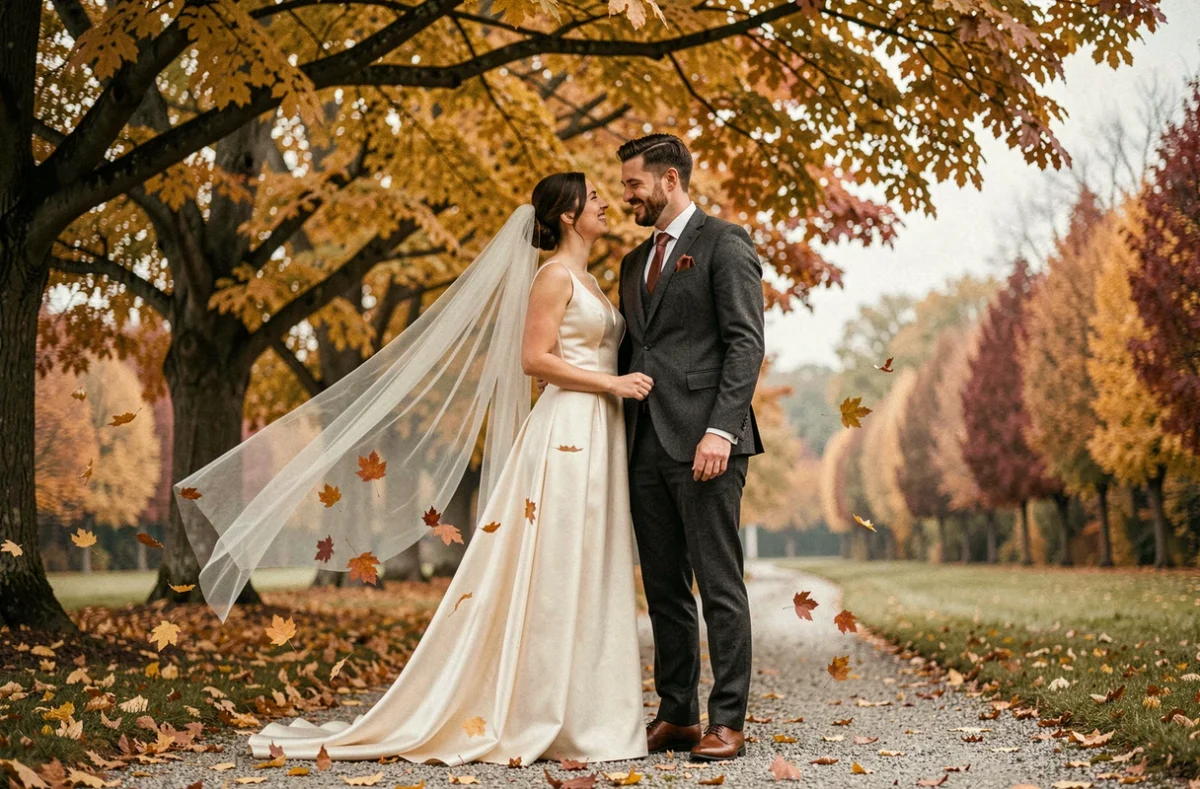
A couple booking a venue in Provence for a June wedding discovers, on the day of the visit, that the temperature drops by more than ten degrees between the afternoon and the end of the evening. This thermal shift, rarely mentioned in brochures, changes the clothing logistics, the choice of furniture, and even the meal schedule.
The season of a wedding is not just about ambiance: it dictates concrete operational decisions, from the budget for vendors to the weather contingency plan.
Thermal comfort and reception venue: the real seasonal criterion
It is often thought that choosing summer guarantees mild weather. In practice, the microclimate of the location matters more than the season itself. A summer wedding in the south of France can start at around 25 °C and then end close to 12 °C after sunset. In the mountains, evenings remain cool even after a hot day.
This temperature range requires planning for adaptable outfits for guests, breathable materials during the day, and warm accessories for the evening. On the organizational side, one anticipates blankets, supplemental heating under tents, or an indoor fallback after a certain hour.
To delve deeper into the concrete impact of each period on logistics and ambiance, a dedicated file on the wedding season on Actu Mariage details these constraints by month and region.
A spring or autumn wedding, on the other hand, often offers smaller temperature differences between day and evening. Guest comfort benefits from this, provided that the risk of rainfall is monitored, which is more pronounced in April or October depending on the regions.
Weather Plan B: a provision to be contracted with vendors
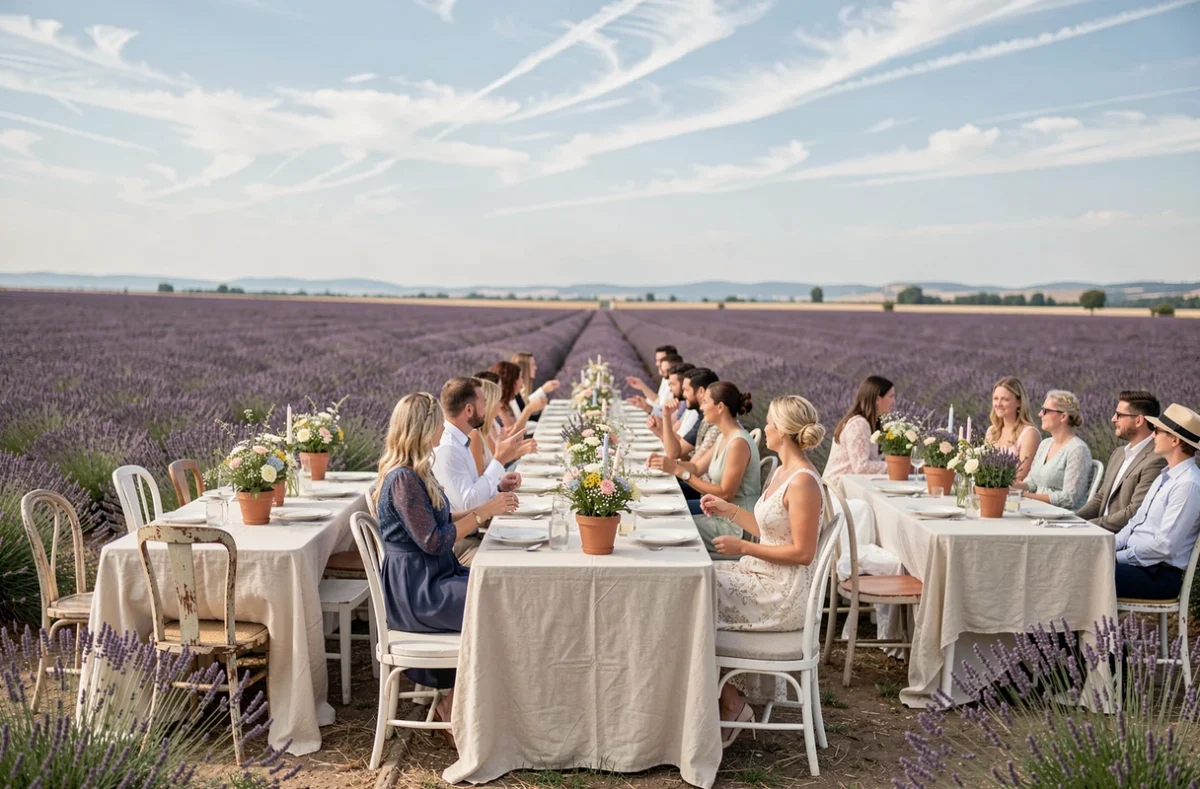
Organizing an outdoor ceremony requires a backup plan. But the current trend goes further: the weather plan B becomes a contractual element, not just a precautionary reflex. Professionals now recommend defining several specific points in advance.
- Who makes the decision to move indoors (the couple, the wedding planner, the venue manager) and at what time this decision is made
- How vendors (caterer, photographer, florist, DJ) are notified and what additional costs are triggered by a change in configuration
- If a plan C exists in case of extreme conditions (strong winds, storms, heatwaves), with a fallback solution distinct from plan B
This framework avoids improvisation on the big day. A caterer who has to move a buffet from the terrace to an indoor room in an hour needs a written scenario, not a last-minute discussion.
The summer season is not the only one affected. An outdoor winter wedding (civil ceremony in a park, reception on a heated terrace) raises the same questions, with additional constraints related to reduced daylight.
Wedding budget by season: price fluctuations and venue availability
The peak wedding season in France remains concentrated between May and September. This period mechanically drives prices up: reception venues display their highest rates, and the availability of vendors sometimes decreases more than a year in advance.
Postponing a wedding to autumn or winter often allows for more flexible negotiation terms. Venues offer off-season packages, florists work with less sought-after (and therefore cheaper) varieties, and photographers have more open schedules.
The budget savings are not limited to the venue. The floral decoration of an autumn wedding can rely on foliage, seasonal fruits, and warm tones without resorting to imported flowers. In winter, candles, pine branches, and heavy textiles create an atmosphere at a lower cost compared to summer floral arrangements.
What the off-season changes for guests
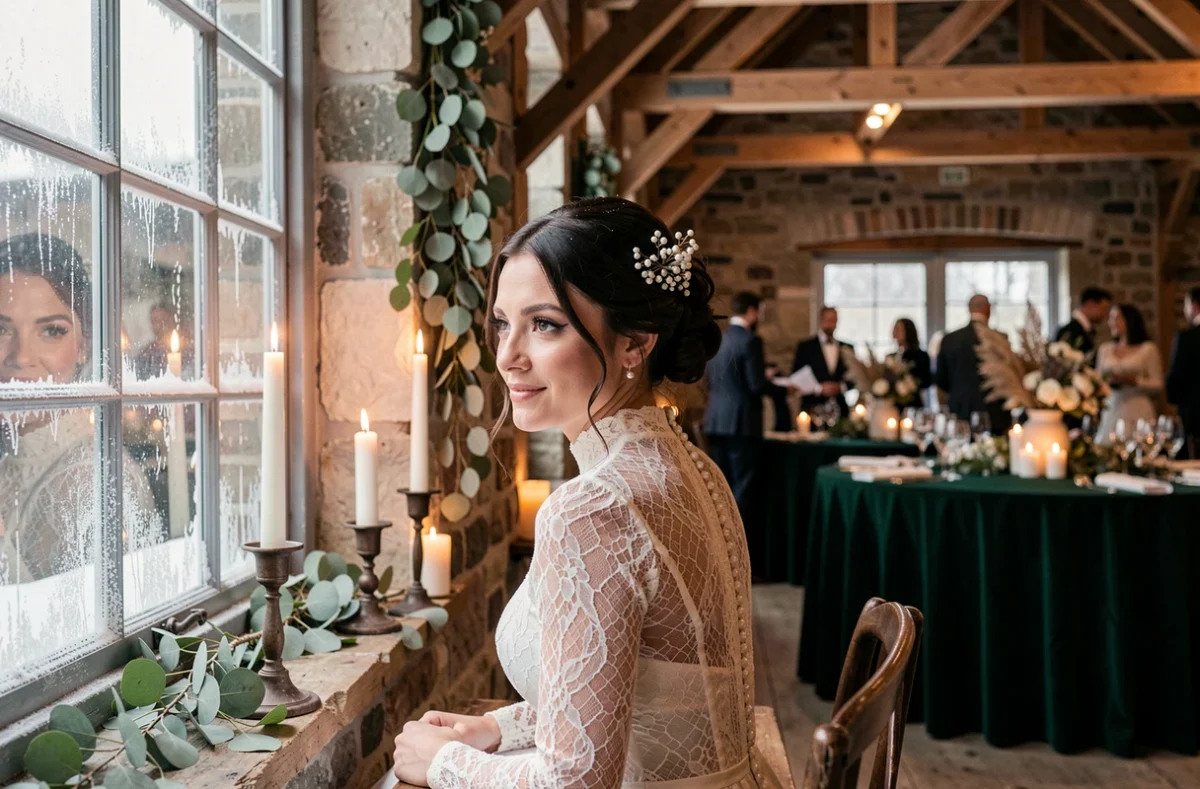
A wedding in November or January raises the question of guest attendance. Feedback varies on this point: some couples find an identical attendance rate, while others note cancellations related to road conditions or school holidays. Communicating the date well in advance remains the best lever to limit absences, regardless of the chosen period.
Permits and safety: formalities that the season does not eliminate
An outdoor wedding may require administrative procedures independent of the weather. In Paris, for example, the temporary occupation of public land for a ceremony, furniture, or installation requires explicit authorization. The file must specify the date, times, number of people, and ground area.
Moreover, a marquee or tent accommodating more than 50 people falls under the regulations for establishments receiving the public. This implies obligations regarding fire safety, emergency exits, and sometimes prior declaration to the town hall.
These constraints do not depend on the season, but they interact with it. A heated marquee in winter adds a technical dimension (ventilation, electrical supply) that the vendor must incorporate into their quote. In summer, the question of natural ventilation and sun protection arises differently, but with the same level of regulatory requirement.
Checklist before setting the date
- Check the venue’s occupancy constraints according to the season (winter closure of certain venues, summer restrictions related to drought)
- Ask the reception venue for its weather backup protocol and associated costs
- Confirm the availability of priority vendors (photographer, caterer) before blocking the date
- Inquire about necessary permits if the ceremony or reception takes place in a public space or under a temporary structure
Choosing a season for a wedding involves much more than an aesthetic preference. It is a trade-off between guest comfort, budget, vendor availability, and technical constraints related to the venue. Addressing these questions early in the planning process helps avoid costly adjustments a few weeks before the date.