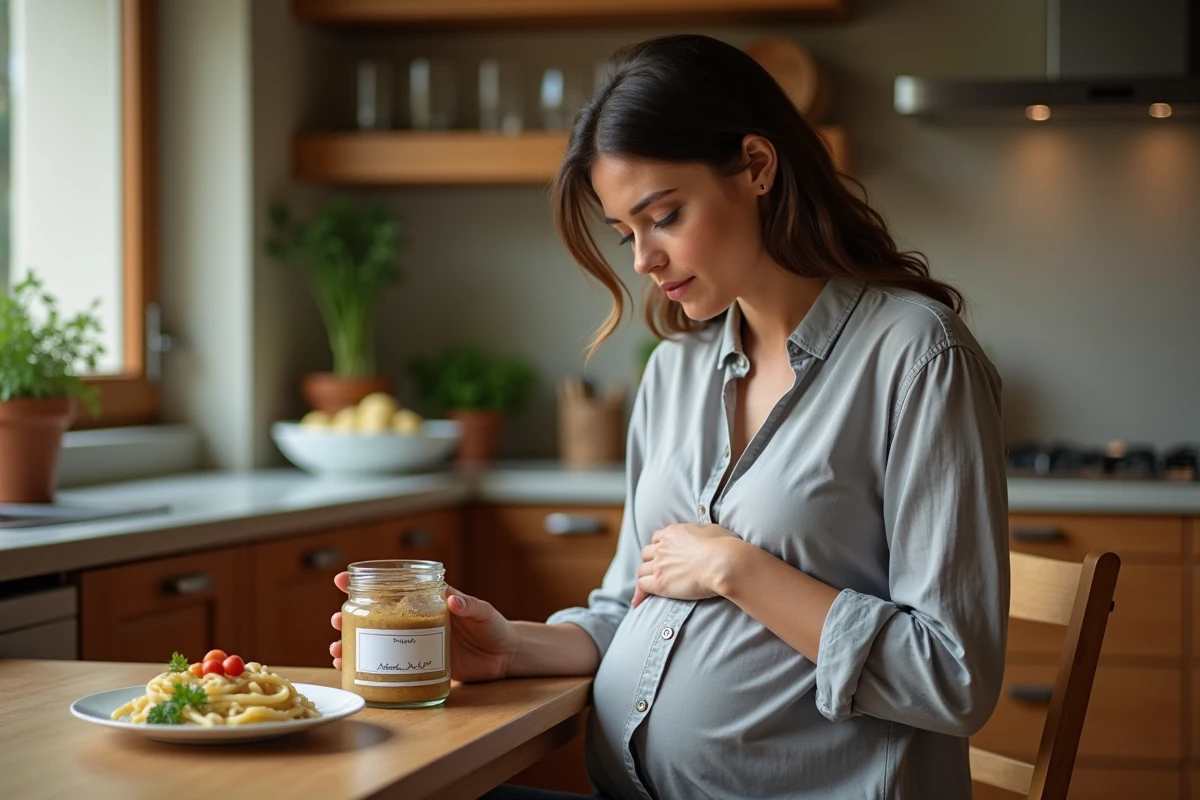
Homemade or artisanal pâté concentrates microbiological risks that traditional pasta does not pose. Distinguishing between these two categories is the starting point for ensuring the safety of pasta and pâté consumption during pregnancy, as the contamination mechanisms differ radically.
Homemade pâté recipes cooked to the core: thermal protocol and microbiological verification
Listeriosis remains the main threat to refrigerated charcuterie products. Listeria monocytogenes is destroyed at a core temperature of 70 °C maintained for two minutes. For a homemade terrine, this temperature must be measured with a probe thermometer at the geometric center of the product, not on the surface.
A country pâté baked at 180 °C for one hour may not reach a core temperature of 70 °C if the mold is too thick or if the filling is very dense. We recommend systematically checking with a digital probe before removing the terrine from the oven. To better understand the issues related to pasta and pâté consumption during pregnancy, the thermal protocol remains the foundation of all prevention.
Microbiological tests accessible at home
Rapid detection kits for Listeria are available at pharmacies and online. They work by immunochromatography on a strip, with results available in 24 to 48 hours after incubation at room temperature. The reliability is lower than that of an accredited laboratory, but a negative test on a properly collected sample significantly reduces uncertainty.
To collect a sample correctly, cut a slice from the center of the terrine with a knife sterilized in boiling water. Place a fragment the size of a fingernail into the culture medium provided with the kit. The complete protocol is detailed in the instructions, but the critical point is to never touch the sample with bare hands.
Strengthened labeling ANSES 2025: what changes for pâté during pregnancy
The ANSES opinion of November 12, 2025, introduced a requirement for strengthened labeling on pâtés. Since January 2026, manufacturers must clearly indicate pasteurization and a strict expiration date of 48 hours after opening for homemade or artisanal versions.
This measure directly targets pregnant women. In practice, it means that an artisanal pâté purchased at the market without a mention of pasteurization should be discarded. Canned goods (jars sterilized at over 100 °C) remain permitted because the thermal treatment destroys Listeria and Toxoplasma gondii.
Reading the label: key mentions to look for
- The mention “pasteurized” or “sterilized” on the packaging guarantees sufficient thermal treatment to eliminate targeted pathogens during pregnancy.
- The expiration date (DLC) must never be exceeded, and the 48-hour rule after opening applies even if the DLC is further away.
- The absence of a mention of pasteurization on a refrigerated product indicates a raw or insufficiently cooked pâté, which should be excluded from a pregnant woman’s diet.
Pasta and pregnancy: real risks versus misconceptions
Cooked pasta poses no risk of listeriosis or toxoplasmosis. Cooking in boiling water far exceeds the thresholds for destroying food pathogens. The real concern lies with toppings and sauces.
A carbonara prepared with a raw egg yolk or insufficiently cooked bacon reintroduces a risk that the pasta itself does not have. We observe that the frequent confusion between “pasta” and “pâté” in online searches leads some patients to unnecessarily restrict their diet.
Sauces and toppings to watch out for
Soft cheeses made from raw milk (brie, farmhouse camembert) added at the end of cooking on hot pasta do not reach sufficient temperature. A gratin baked at 200 °C for 20 minutes neutralizes the risk.
Ground meats in a Bolognese sauce must reach a uniform color without any pink areas. Pork or game meat, often present in ragù, is particularly at risk for toxoplasmosis if the cooking is insufficient.

Vegetable pâtés based on legumes: a rapidly growing alternative
According to the CNGOF bulletin from April 2026, the adoption of pasteurized vegetable pâtés has increased by 30% among pregnant vegetarians. Spreads made from lentils or chickpeas, packaged in sterilized jars, eliminate the risk associated with raw meat while providing plant-based proteins and non-heme iron.
Non-heme iron is better absorbed in the presence of vitamin C. Pairing a lentil pâté with a few drops of lemon or raw vegetables rich in ascorbic acid optimizes intake. This point is rarely mentioned in public pregnancy dietary guides.
- Canned vegetable pâtés (jars or metal cans) have undergone industrial sterilization and are safe throughout pregnancy as long as the packaging is intact.
- The refrigerated “fresh” versions follow the same rules as animal pâté: check for the mention of pasteurization and respect the 48-hour limit after opening.
- Homemade hummus or chickpea spread recipes rarely cook to a core temperature above 70 °C, but the risk of Listeria remains low on dried legumes if they are boiled in water before blending.
The distinction between foods cooked to the core and foods simply reheated remains the decisive criterion for securing the diet during pregnancy. Any non-sterilized or non-pasteurized meat product stored in the refrigerator represents a potential vector for listeriosis. Well-cooked pasta, accompanied by toppings brought to temperature, and sterilized vegetable or animal pâtés constitute a reliable dietary foundation for the nine months.