
After 60, the body silently modifies its biological parameters: bone density, blood pressure, blood sugar, sensory acuity. Identifying the medical examinations to be performed from this age allows for the detection of pathologies before they produce symptoms. Since June 2024, the Mon Bilan Prévention program structures this approach around appointments at key ages in life, with a personalized prevention plan upon completion.
Recommended frequency of preventive examinations after 60
Screenings do not all follow the same schedule. Some are repeated every two years, others every five years, and a few are only performed once at a given age. The table below summarizes the main examinations and their frequency as outlined in public health recommendations.
| Examination | Frequency | Target population | Coverage |
|---|---|---|---|
| Overall health assessment (Assurance Maladie) | Every 5 years | All insured, priority to seniors | Free |
| Colorectal cancer screening (fecal immunological test) | Every 2 years | Men and women aged 50 to 74 | 100% covered |
| Screening mammography | Every 2 years | Women aged 50 to 74 | 100% covered |
| Ophthalmological check-up | Every 1 to 2 years | All | Partial reimbursement |
| Hearing assessment | Every 2 to 3 years | All | Partial reimbursement |
| Flu vaccination | Annual | Aged 65 and over | Free |
| Mon Bilan Prévention | One-time (key ages: 60-65, then 70-75) | All insured | Free |
What stands out from this table: the majority of free screenings cease at 74. Between 60 and 74, the organized prevention window is therefore the widest, and it is precisely during this period that these examinations have the most impact on early management.
To delve deeper into the subject, a file details which health examinations to have at 60 on Medic Com with practical guidelines for each assessment.
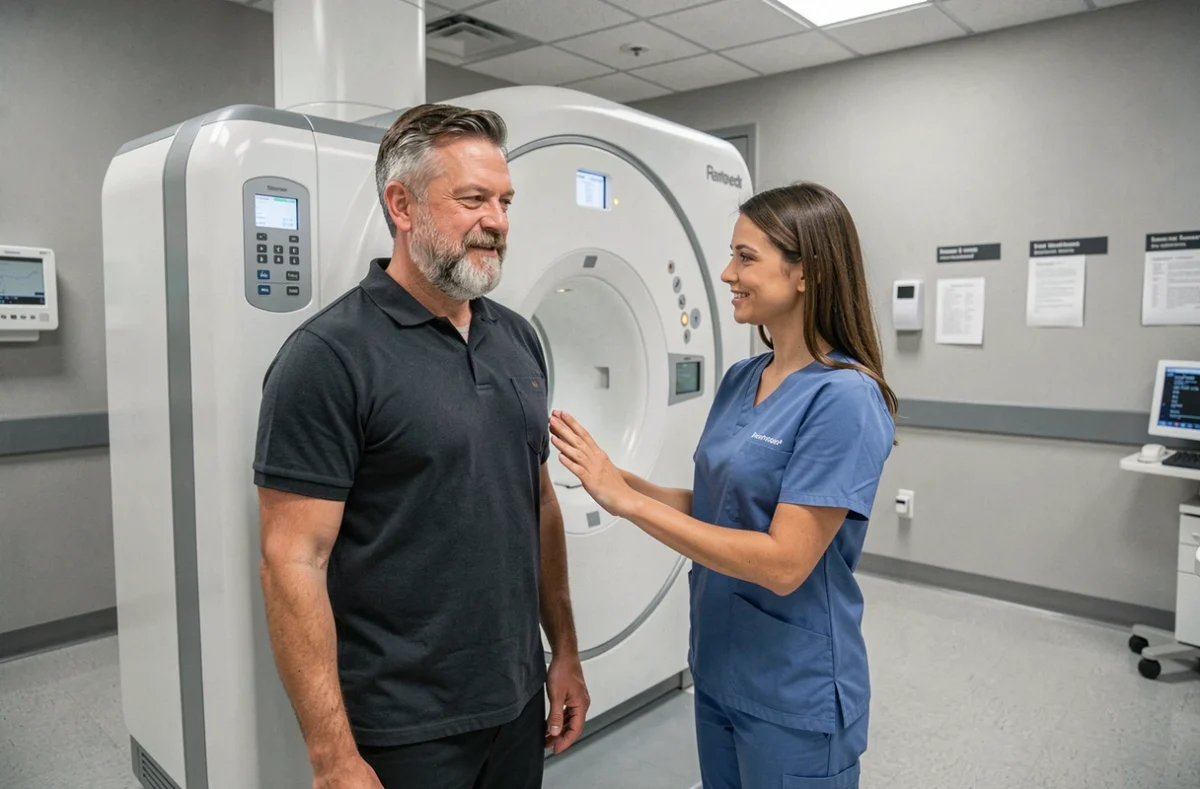
Mon Bilan Prévention: what this program changes concretely
Before June 2024, prevention after 60 primarily relied on the five-year health assessment from Assurance Maladie and on the individual initiative of the patient or the primary care physician. Mon Bilan Prévention adds a structured layer that goes beyond the framework of traditional biological analyses.
This appointment addresses cardiovascular risk, vaccination, physical activity, sedentary lifestyle, nutrition, and addictions. It leads to a personalized prevention plan. However, if an unmonitored health issue is suspected during the assessment, a separate diagnostic consultation remains necessary.
Two age groups, two distinct assessments
The program provides for a first appointment between 60 and 65, followed by a second between 70 and 75. This organization corrects a common blind spot: considering that a single assessment at 60 covers the entire following decade. Biological parameters evolve significantly between 65 and 75, and a re-evaluated follow-up at mid-point allows for adjustments in prevention priorities.
The assessment is free and can be conducted by a doctor, a midwife, or a trained pharmacist, depending on the content addressed.
Vaccination for seniors: an underestimated aspect of prevention
Articles on medical examinations after 60 almost systematically focus on blood tests, imaging, and cancer screenings. Vaccination prevention constitutes a distinct area, with recommendations updated by the Haute Autorité de santé.
Seasonal flu after 65
Flu vaccination remains recommended every year for those aged 65 and over, particularly for people living in communal settings. The HAS does not recommend making it mandatory for seniors, but it advocates for a mandatory flu vaccination for healthcare professionals in contact with this population.
This distinction matters: the individual protection of seniors partly relies on the vaccination coverage of their caregiving environment.
Other vaccinations to check
The diphtheria-tetanus-poliomyelitis booster follows a fixed schedule. Shingles and pneumococcus have specific recommendations based on risk profile. The primary care physician integrates these elements during Mon Bilan Prévention, which avoids the need for multiple dedicated appointments.

Sensory screenings after 60: vision and hearing
The gradual loss of visual and auditory acuity often occurs without the person fully realizing it. A regular ophthalmological check-up can detect glaucoma, macular degeneration, or early cataracts. Early detected glaucoma stabilizes; late detection leads to irreversible vision loss.
On the hearing side, an assessment every two to three years identifies presbycusis before it affects social life. Isolation related to hearing loss is documented as an aggravating factor for cognitive decline.
- Ophthalmologist: every one to two years, with measurement of intraocular pressure and fundus examination based on history
- ENT or audioprosthetist: tonal and vocal hearing test every two to three years, earlier if discomfort is felt
- Dentist: an annual oral health assessment, as chronic periodontal diseases increase cardiovascular risk
These sensory examinations are not included in national organized screening campaigns. They rely on the individual initiative of the patient and the guidance of the primary care physician.
What the primary care physician coordinates in this follow-up
The pivotal role of the primary care physician goes beyond simply prescribing tests. They centralize the results of Mon Bilan Prévention, organized screenings, and sensory examinations to construct a coherent longitudinal follow-up.
- They identify individual risk factors (family history, smoking, sedentary lifestyle) to adapt the frequency of assessments
- They refer for a colonoscopy if the fecal immunological test returns positive, or to a cardiologist if the calculated cardiovascular risk justifies it
- They check vaccination status and prescribe necessary boosters
- They re-evaluate the prevention plan at each key age group of the national program
Without a declared primary care physician, the prevention pathway loses its coherence. The results of various examinations remain scattered among specialists, and no professional has a comprehensive view to arbitrate priorities.
Prevention after 60 relies on a precise schedule where each examination has its appropriate window. The period between 60 and 74 concentrates the largest number of covered screenings. Waiting for the first symptoms to consult means losing the main advantage of this program: intervening before the pathology establishes itself.